Kathmandu has numerous identities. It is renowned as the city of gods; it is also called the city of open museums and the UNESCO World Heritage Sites capital as it houses the highest number of World Heritage Sites listed in UNESCO. It was also entitled as the most colorful city in the world several times.
The devastating earthquake of April 25 took its heavy toll upon these heritages sites, and tourists visiting these sites plummeted sharply.
Appearance of these sites is completely different from what media have portrayed so far, or from our imagination harbored from the images of post disaster sites. Though reflection of disaster is apparent, World Heritage Sites in Kathmandu—Swayambhunath, Bouddhanath, Pashupatinath, Bhaktapur Durbar Square, Changunarayan, Patan Durbar Square and Basantapur Durbar Square – are marked safe for visit, and the government formally opened the sites for visitors by organizing an event.
Nepal government has urged both internal and external tourists to visit these sites as they stand tall, and look serene and sound as always.
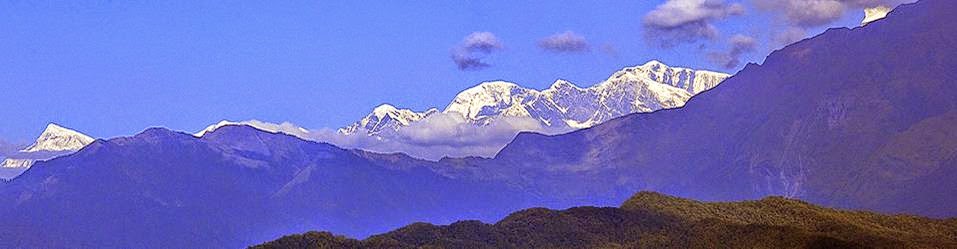
Nagarkot is located 32 kms, east of Kathmandu (see map), Nepal. Nagarkot thrills visitors with its unrestricted view of the mountain range from Annapurna in the west to the mighty Everest in the East.It is a 30-minute drive from Bhaktapur, a 45-minute drive from Tribhuvan International Airport and an hour’s drive from Kathmandu. Taking a helicopter, it is just a 7-minutes’ ride from Tribuhavan International Airport.
Historically, Nagarkot was a place for the royals of Nepal to escape the scorching heat of summer and a hectic city life. In the 60’s explorers would battle the shivering winds and sleepless nights to see the stupendous sunrise and sunsets. Today, still people from all over World, from different walks of life, travel to Nagarkot, to enjoy the picturesque rural scenery of terraced rice fields, green pastures, the sunrise and sunsets; but all in the comforts of a world renowned hotel- Club Himalaya.
7200 ft above sea level : ideal for acclimatization if you are going to high altitude treks or to Tibet or Bhutan .
Summer (May-September) : Nagarkot is windy throughout the year and is 7 Deg C cooler than Kathmandu in summers
Himalayan View : One can view Mt Everest on the North – East to the Annapurna in the North- West with a maximum range of the Himalayan peaks.
Full of legends & History :
Birth of the world – Mahadev Pokhari
Birth of Kathmandu – Manjushree gufa
Unification of Nepal – Prithivi Narayan Shah & his Fort
Summer Palace of the Ranas – Bhangeri Durbar
Sun Risies & Sets with hashish – The Hippie era
So near, yet so far away from the hustle and bustle of caotic Kathmandu
Near the international airport (25km/45minutes) ideal to relax and recover*recoup from jet lag before starting a hectic tour or trekking.
Village walks to experience rural Nepal – Tamang, Newar, Chhetri & Bahun villages within walking distance.
Nagarkot now a tourist hub with many hotels and restaurants to choose from.
Forest walks to see the flora and fauna o the hills as well as bird watching.
Club Himalaya is the jewel on the crown of Nagarkot.
Mountain biking or hiking to Changunarayan, Bhaktapur or Swayambhu.
Nepal Mountaineering Association(NMA) organized press conference at Nepal Tourism Board on 22nd December to felicitate Ms. Sushmita Maskey for her successful climbing of highest mountains of seven continents i.e. Seven Summit. This program was inaugurated by reading the message of welcome and congratulation send by Prime Minister Mr. Sushil Koirala. Dr. chiranjibi Nepal, Financial Advisor of Prime Minister was the chief guest for the program. On this occasion NMA awarded Rs.4,00,000/- to her. During this program, Ms. Maskey shared her experience of her journey. Mr. Suresh Man Shrestha, Secretary of Ministry of Culture, Tourism and Civil Aviation, Mrs. Yankila Sherpa, Chief Advisor of NMA, Mr. D.B. Limbu, President of JTCC Congratulated on her achievement. The chief guest Dr. chiranjibi Nepal also appreciated and congratulated her for this success.
Swargadwari is a hilltop temple complex and pilgrimage site in Pyuthan District, Nepal
Swargadwari is a hilltop temple complex and pilgrimage site in Pyuthan District, Nepal commemorating the special role of cows in Hinduism. It is said to have been founded by one Guru Maharaj who spent most of his life in the vicinity herding and milking thousands of cows. According to traditional stories,
(CNN) -- Mention Nepal and most people think snow-capped scenes, of 7,000-meter mountains and the climbers raring to conquer them.
Is there much to the country beyond its mighty Himalayan peaks?
Yes.
Thankfully, for those who don't consider it a vacation to hike for days, eat out of tins and do their business in a hole in the ground, it's possible to "do" Nepal without scaling anything.
Here are six ways to experience mountain country minus the mountain climbing.
SAURAHA, DEC 19 - The 11th edition of the Chitwan Elephant Festival is scheduled to be held in Sauraha from December 26-30 on the occasion of Christmas and New Year 2015.
The festival is aimed at promoting tourism and spreading awareness about wildlife preservation, said Suman Ghimire, coordinator of the event. It started in 2004 as an international elephant race and since then it has been celebrated as a festival.
KATHMANDU, DEC 19 - Direct air links between Nepal and Sri Lanka are set to resume after a break of two and a half decades with Colombo-based carrier Mihin Lanka planning to begin services by February, Tourism Ministry officials said.
The low-cost airline, which is owned by the Sri Lankan government, has officially applied for operating authorization to conduct daily flights between Kathmandu and Colombo.
Feature: Nepal's first aircraft museum to boost tourism in far west region
by Shristi Kafle
KATHMANDU, Dec. 17 (Xinhua) -- The opening of Nepal's first aircraft museum in Dhangadi in the far western part of the country, some 500 km from Kathmandu, has attracted local and foreign tourists to the much-neglected region.
Just three months after its opening, the aircraft museum has been the talk of the town and thousands of people have flocked to view the different miniature aircraft on display.
Nepal is one of the richest countries in the world in terms of bio-diversity due to its unique geographical position and altitudinal variation. The elevation of the country ranges from 60m above sea level to the highest point on earth, Mt. Everest at 8,848 m, all within a distance of 150 km resulting into climatic conditions form sub-tropical to Arctic. www.suraj.markerstone.com
11th Chitwan Elephant Festival 2014 26th - 30th December 2014 Sauraha, Chitwan, Nepal ---------------------------------------------- २०७१ Poush देखी १५ गते सम्म सौरह, चितवन्, नेपाल see more: http://markerstone.com/pages.php?pageID=329
Customs and traditions differ from one part of Nepal to another. A conglomeration lies in capital city Kathmandu where cultures are blending to form a national identity. Kathmandu Valley has served as the country’s cultural metropolis since the unification of Nepal in the 18th Century.A prominent factor in a Nepali’s everyday life is religion. Adding color to the lives of Nepalis are festivals the year round which they celebrate with much pomp and joy. Food plays an important role in the celebration of these festivals.
Religion:Nepal was declared a secular country by the Parliament on May 18, 2006. Religions practiced in Nepal are: Hinduism, Buddhism, Islam, Christianity, Jainism, Sikhism, Bon, ancestor worship and animism. The majority of Nepalis are either Hindus or Buddhism. The two have co-existed in harmony through centuries. Buddha is widely worshipped by both Buddhists and Hindus of Nepal. The five Dhyani Buddhas; Vairochana, Akshobhaya, Rathasambhava, Amitabha and Amoghasiddhi, represent the five basic elements: earth, fire, water, air and ether. Buddhist philosophy conceives these deities to be the manifestations of Sunya or absolute void. Mahakaala and Bajrayogini are Vajrayana Buddhist deities worshipped by Hindus as well. Hindu Nepalis worship the ancient Vedic gods. Bramha the Creator, Vishnu the Preserver and Shiva the Destroyer, are worshipped as the Supreme Hindu Trinity. People pray to the Shiva Linga or the phallic symbol of Lord Shiva in most Shiva temples. Shakti, the dynamic element in the female counterpart of Shiva, is highly revered and feared. Mahadevi, Mahakali, Bhagabati, Ishwari are some of the names given. Kumari, the Virgin Goddess, also represents Shakti.Other popular deities are Ganesh for luck, Saraswati for knowledge, Lakshmi for wealth and Hanuman for protection. Krishna, believed to be the human incarnation of Lord Vishnu is also worshipped widely. Hindu holy scripts Bhagawat Gita, Ramayan and Mahabharat are widely read in Nepal. Vedas, Upanishads and other holy scriptures are read by well learned Brahmin Pundits during special occasions.
Customs: The diversity in Nepal in terms of ethnicity again makes room for various sets of customs. Most of these customs go back to the Hindu, Buddhist or other religious traditions. Among them, the rules of marriage are particularly interesting. Traditional marriages call for deals arranged by parents after the boy or girl come of age. Nepalis do not eat beef. There are several reasons for this, one being that the Hindus worship cow. Cow is also the national animal of Nepal. Another interesting concept among Nepalis is division of pure and impure. “Jutho” referring to food or material touched by another’s mouth directly or indirectly, is considered impure by Nepalis. Nepalis consider cow dung to be pure for cleansing purposes. During menstruation women are considered impure and hence, are kept in seclusion until their fourth day purification bath.Nepal is a patriarchal society. Men usually go out to work while women are homemakers. However, in cities, roles can differ. Most Nepalis abide by the caste system in living habits and marriage. Rural Nepal is mostly agrarian, while some aspects of urban life carry glitz and glamour of the ultra-modern world.
Food:Nepal does not have a distinct cooking style. However, food habits differ depending on the region. Nepali food has been influenced by Indian and Tibetan styles of cooking. Authentic Nepali taste is found in Newari and Thakai cuisines. Most Nepalis do not use cutlery but eat with their right hand.The regular Nepali meal is dal (lentil soup), bhat (boiled rice) and tarkari (curried vegetables), often accompanied by achar (pickle). Curried meat is very popular, but is saved for special occasions, as it is relatively more expensive. Momos (steamed or fried dumplings) deserve a mention as one of the most popular snack among Nepalis. Rotis (flat bread) and dhedo (boiled flour) also make meals in some homes.
The population of Nepal was recorded to be about 26.62 million according to a recent survey done by the Central Bureau of Statistics, Nepal. The population comprises of about a 101 ethnic groups speaking over 92 languages. The distinction in caste and ethnicity is understood more easily with a view of customary layout of the population.Though, there exist numerous dialects, the language of unification is the national language, Nepali. Nepali is the official language of the state, spoken and understood by majority of the population. Multiple ethnic groups have their own mother tongues. English is spoken by many in Government and business offices. It is the mode of education in most private schools of Kathmandu and some other cities.
Northern Himalayan People:In the northern region of the Himalayas are the Tibetan-speaking groups namely Sherpas, Dolpa-pas, Lopas, Baragaonlis, Manangis. The Sherpas are mainly found in the east, Solu and Khumbu region; the Baragaonlis and Lopas live in the semi-deserted areas of Upper and Lower Mustang in the Tibetan rain-shadow area; the Manangis live in Manang district area; while the Dolpa-pas live in Dolpa district of west Nepal.
Middle Hills and Valley People:Several ethnic groups live in the middle hills and valleys. Among them are the Magars, Gurungs, Tamangs, Sunuwars, Newars, Thakalis, Chepangs, Brahmins, Chhetris and Thakuris. There are also occupational castes namely: Damai (tailor), Sarki (cobbler), Kami (blacksmith) and Sunar (goldsmiths).
Ethnic Diversity in the Kathmandu Valley:Kathmandu Valley represents a cultural cauldron of the country, where, people from varied backgrounds have come together to present a melting pot. The natives of the Kathmandu Valley are the Newars. Newari culture is an integration of both Hinduism and Buddhism. The Newars of Kathmandu Valley were traders or farmers by occupation in the old days.
Terai People:The main ethnic groups in Terai are Tharus, Darai, Kumhal, Majhi and other groups. They speak north Indian dialects like Maithili, Bhojpuri. Owing to the fertile plains of Terai, most inhabitants live on agriculture. There are, however, some occupational castes like Majhi (fisherman), Kumhal (potter) and Danuwar (cart driver).
For more information about Nepali people, Please visit: http://census.gov.np/(official web site of the Central Bureau of Statistics).
Of the total number of species found globally, Nepal possesses 2.80 percent plants. Record from 2006 shows that Nepal has 6,391 flowering plant species, representing 1,590 genera and 231 families. Nepal’s share of flowering plant species is 2.76 percent of the global total compared to earlier records of 2.36 percent. Nepal’s share of pteriodophytes is 5.15 percent compared to earlier records of 4.45 percent. There are 2,532 species of vascular plants represented by 1,034 genera and 199 families in the protected sites. Some 130 endemic species are found in the protected sites.
For ecology and vegetation purpose Nepal could be divided into four floristic regions i.e. (a) western (b) north-western (c) central, and (d) eastern, and bio-climatically these are broken down into twenty regions from humid tropical climate to the arid, alpine regions.
There are 399 endemic flowering plants in Nepal of which about 63 percent are from the high mountains, 38 percent from the mid hills, and only 5 percent from the Terai and Siwaliks. Similarly, the central region contains 66 percent of the total endemic species followed by 32 percent in the western and 29 percent in the eastern regions.
Medicinal Plants: The Himalayas are famous for medicinal plants and have even been mentioned in the Aurveda. Many of the herbs and plants found in the Himlayas are used in traditional healing systems like Ayurvedic, Homoeopathic, Amchi etc. Some of these plants are even used for allopathic medicine. Medicinal plants are abundantly found in: the Terai region of Nawalparasi, Chitwan, Bardia, Dhanusha, mid hill region of Makhwanpur, Syangja, Kaski, Lamgjung, Dolakha, Parvat, Ilam, Ramechhap, Nuwakot, and the Himalayan region of Dolpa, Mugu, Humla, Jumla, Manang, Mustang and Solukhumbu.
Orchids: In ancient Rome, Theophrastus, a student of Plato, was intrigued by the sight of a plant with a pair of roots. Orchis was the name he gave them, the Greek word for testicles. Worldwide, there are some 500 to 600 genera and some 20,000 to 35,000 names, the largest of all plant families, and out of this, Nepal has 57 genera (27 Terrestrials and 30 Epiphytic) with a few Lithophytes.Nepal is endowed with an incredible variety of orchids scattered across the country. Dedrobium is the largest species, followed by Habenaria and Bulbophyllum. Anthogonium, Hemipilia and Lusia are some of the other varieties amongst the nearly two dozen single species families.
For more information about Nepal’s plant resources, Please visit: http://www.dpr.gov.np/(official web site of the Department of Plant Resources, Ministry of Forests & Soil Conservation).


.jpg)

.jpg)

 You can subscribe by e-mail to receive news updates and breaking stories.

